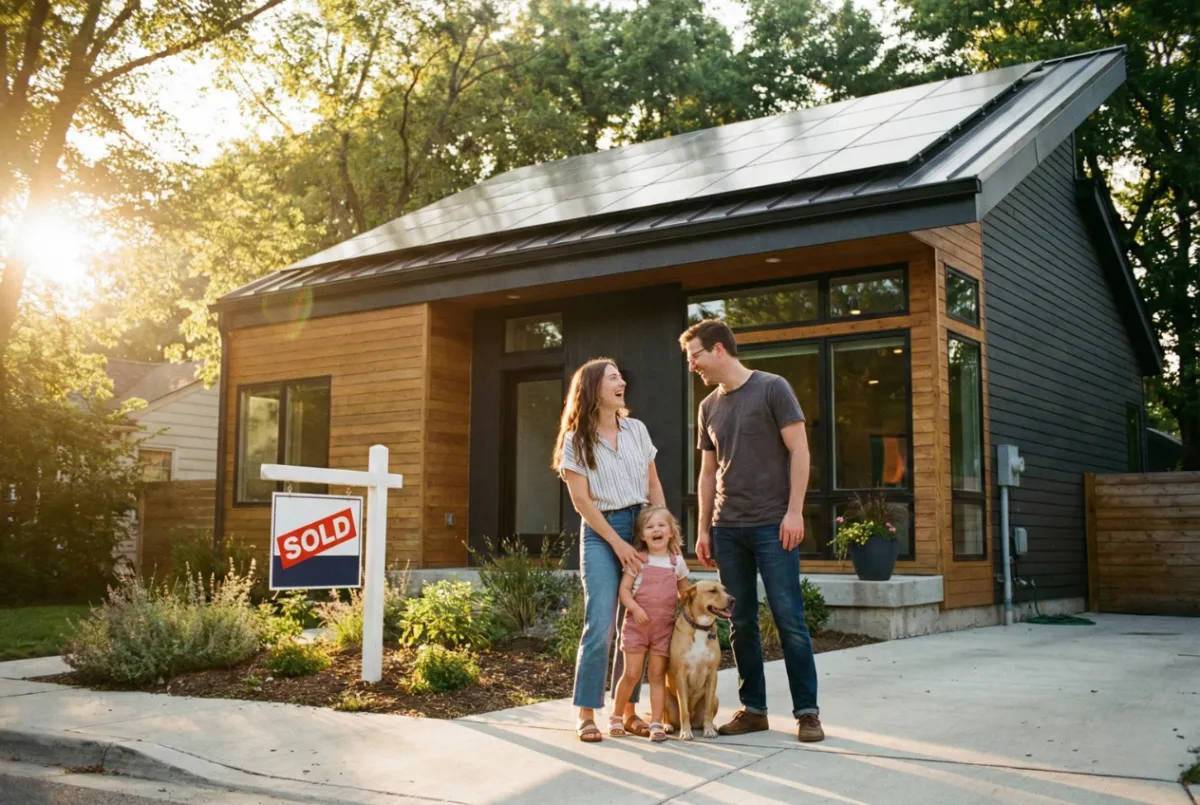
Could Trump's Ban on Corporate Single-Family Home Buying Make Starter Homes Affordable Again?
I've helped thousands of first-time buyers get into their own homes over the years – walking them through that exciting (and sometimes stressful) process of finding something they can actually afford. But lately, with starter home prices often pushing past $300,000 in many areas and the national median home price around $410,000, affordability feels out of reach for way too many young families. Homeownership is tougher than it's been in decades, with payments eating up a big chunk of income. That's why President Trump's recent announcement to ban large corporations from buying more single-family homes has me – and a lot of my clients – paying attention. It could change things for everyday buyers.
Quick Background
After the 2008 crash, big investors like hedge funds and private equity firms started buying up foreclosed homes in bulk, turning them into rentals. Today, these institutional investors own about 1-3% of all single-family homes nationwide (though up to 20-30% of sales in some hot spots like Atlanta or Phoenix).
The idea behind Trump's plan, announced January 7, 2026, is simple: stop those big players from snapping up more houses so regular families have a better shot. It wouldn't force them to sell what they already own, but it would block future buys and maybe encourage some sell-offs.
What This Could Mean for the Market
So, what could this mean for the market? Here's my breakdown, easy to scan:
The cautious view (smallest change):
Home prices might drop just 1-3% overall – helpful in some spots, but not a big fix nationally
Big investors only own a tiny slice of the total housing stock, so adding those homes back won't flood the market
Reasons: The real problem is we need millions more homes built, plus any rules might have loopholes or face challenges
Result: A little less competition for buyers, but starter homes still tough to afford for many
The hopeful middle ground (decent impact):
Prices could ease 5-10% in areas where investors are active
More houses available for families to buy instead of rent, especially entry-level ones
On a $350,000 starter home: Could mean $17,000-35,000 less upfront, fewer bidding wars
Perks: Higher homeownership for first-timers, more stable neighborhoods, and a boost to overall affordability
The exciting upside (biggest win I'm hoping for):
If it leads to selling off existing corporate-owned homes: Prices drop 10-20% or more in investor-heavy markets
Sparks a wave of buying, encourages more building, and even helps lower rents as supply grows
Imagine starter homes dipping below $300,000 in more places, making that first home feel possible again for young buyers
Turns the market back toward families, kinda reversing the investor trend from the last decade
Final Thought
We'll see how this plays out – it needs Congress to make it law, and details are coming soon. But if you're a first-time buyer sitting on the sidelines, this could be worth watching closely.
Thinking about jumping into the market? Talk to a lender or realtor soon – things can shift fast. What's your take – game-changer or just a start? Comment below or connect with me on LinkedIn. Love hearing from you!


